


By Mac Mckechnie
Marcia was only twenty-one when the world changed.
It wasn’t a storm, or an illness, or even something cinematic like a fire. It was just a car. A flash of metal. A bend in the road. One missed second.
One moment, she was laughing in the passenger seat beside her sister, Georgia, music loud, hair blowing out the window. The next, there was screaming metal and white-hot silence.
When she woke up, she was alone.
Alone in a hospital bed. Alone beneath the weight of a blanket that covered legs she could no longer feel. Alone in a silence that no one around her could quite break.
Her mother clutched her hand and whispered, “You’re alive.” But Georgia wasn’t. And that made survival feel less like a blessing, and more like a punishment.
She tried to scream, but her throat didn’t work the way it used to. The ceiling tiles became her sky. She counted the dots on them like stars in a world she no longer belonged to. Her body — the body that once danced across polished floors — didn’t respond to her. Nurses were kind. Doctors were careful. But none of them were Georgia.
The grief sat inside her like stone. She didn’t cry much. She didn’t speak. She existed — and even that felt unearned.
Sometimes, in the quiet of the night, she would drift into half-sleep and dream of the studio mirror. Georgia was there, clapping softly as Marcia spun, arms open, face turned skyward. Waking up was the cruellest part.
Weeks blurred into each other, marked only by the rhythm of medicine rounds and sterile mealtime trays. She heard the word “forever” whispered more than once. She learned to nod, to smile without smiling. Hope was something other people said for their own comfort, not hers.
One grey morning, her mother wheeled her into the car and drove out of town without explanation. Marcia didn’t ask where they were going. She didn’t care.
They arrived at a quiet therapy farm — the kind with wind-chimed porches and peeling wooden signs that said things like “Hope Grows Here.” Her mother called it a “healing visit.” Marcia called it pointless.
Until she saw him.
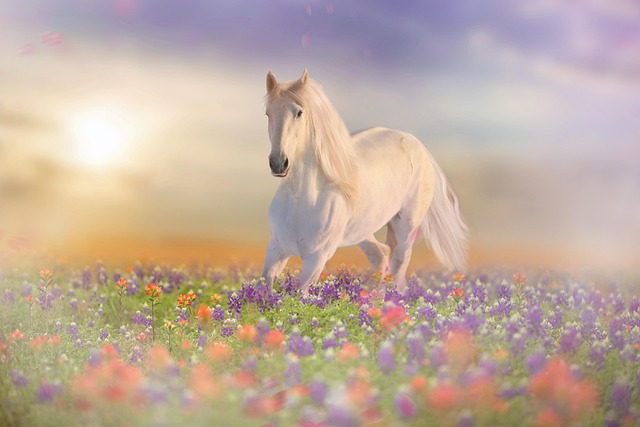
He was white. Almost silver in the sunlight. A horse with a strong body, feathered hooves, and deep, human eyes. His name was Ash.
He didn’t flinch at her chair. He didn’t treat her like she was broken. He just stood close and lowered his head gently into her lap, warm breath tickling her hands.
And Marcia broke.
Not loudly. Not dramatically. Just a quiet, steady weeping she hadn’t allowed herself for months. Ash didn’t move. He didn’t shy away. He simply stayed — calm, solid, present.
He didn’t need words. Neither did she.
She returned the next day. And the next. Something about Ash’s presence softened the ache inside her. She began to talk — at first to him, then to the volunteers.
“I used to dance,” she whispered one day, as her fingers traced his mane. “She always watched me. My sister. She said I made the air look like poetry.”
Ash flicked an ear.
“I was supposed to be driving,” Marcia added. “That night. I was too tired, and she offered. I let her.” Her voice cracked. “I should’ve—”
Ash snorted suddenly, almost interrupting her. Then leaned his head into her chest again, heavier this time. As if to say: Stop. You’re here.
She started writing again — little notes she tied to Ash’s bridle: “Today I didn’t hate the mirror.” “I remembered the rain on the roof the night before the accident.” “I miss dancing so much, I dream of floating.”
The volunteers found her notes and returned them with a smile. “You’re healing,” one said gently.
“I’m surviving,” Marcia replied. But inside, something small was beginning to root.
The farm offered riding therapy, and though it terrified her, she agreed. Adaptive saddle. Side-walkers. A specially trained instructor named Drew with a soft laugh and kind eyes.
“Don’t think about what you can’t feel,” Drew said. “Think about what you still can.”
It was slow at first. Her balance was shaky. Her body unsure. But Ash was steady. She learned to move with his rhythm. To trust again — not just him, but herself.
And Drew… Drew saw her. Not just the chair, or the loss, or the pain — but her. He made her laugh, sometimes unexpectedly. He remembered she liked her tea weak and her reins loose. She caught him watching her once, not with pity, but pride. One day, he told her his sister had struggled with depression. He said nothing more. He didn’t need to.
Some days they talked. Some days they rode in silence. The silence never felt empty.
One afternoon, as the sun dipped low, Drew handed her a photograph. It was of her on Ash’s back, face turned skyward, wind in her hair.
“You look like you’re flying,” he said.
She blinked back tears. “I felt like I was.”
She began journaling more deeply. She wrote letters to Georgia she never intended to send. She began sketching too — mostly Ash, sometimes Drew, once a vision of herself dancing in a field of flowers.
Summer came. The wildflowers bloomed in the fields beyond the stables. Marcia rode often now, her journal tucked into her side bag.
One afternoon, a little girl in a wheelchair visited the farm. Her name was Lucy, and her eyes were curious but cautious. Marcia noticed how she stayed near the fence, hands clenched, watching but not daring.
By the third visit, Marcia wheeled beside her.
“Would you like to meet my friend?” she said.
Lucy shrugged.
“He doesn’t care how you walk,” Marcia added. “Just that you’re here.”
She guided Lucy’s hand to Ash’s nose. The horse snuffled gently, and Lucy giggled.
From then on, she came every week.
They brushed Ash together. Lucy read aloud from a notebook. Marcia showed her how to sit tall, how to listen. One afternoon, Lucy asked, “Do you think I could ride, like you?”
Marcia nodded. “You already are.”
A few weeks later, Lucy mounted Ash with help. Her legs trembled, but she smiled so hard her cheeks hurt. As she passed Marcia on the path, she reached out and they high-fived like teammates.
Later, Marcia helped her write a poem for Ash. Lucy titled it “The Horse Who Waited.”
Autumn arrived in golden flurries. Lucy rode often now. Drew walked beside her, hand on the reins, and Marcia watched from the fence, pride blooming where grief had once rooted.
After one session, Drew handed her a coffee and joined her on the bench. They watched the others ride in silence.
“You bring something out in people,” he said softly.
Marcia smiled. “It’s Ash.”
“Ash helps,” he agreed, then added, “but you bring them to him.”
He glanced sideways at her then, nervous in a way she hadn’t seen before. “You ever think about dancing again?” he asked. “I mean, in your own way. Not on stage, just… living it?”
She didn’t answer right away. But later that evening, she danced on paper — a sketch of her standing barefoot in wildflowers, arms outstretched. And for the first time, she allowed herself to smile without guilt.
It had been nearly two years since the accident. Marcia had long made peace with the diagnosis — “complete spinal injury,” the specialists had said. “No expectations for recovery.”
But nerves, like grief, don’t always follow rules.
First came the tingling. Then a twitch. Her doctors were stunned. “Unlikely, but not impossible.”
One crisp morning, Drew reached for her hands. Ash stood nearby, quiet and steady.
And Marcia stood.
Only for a moment. Only with help. But she stood.
Ash stepped forward and pressed his nose to her heart.
Drew didn’t speak. He just smiled, and gently steadied her as she sat again. Their hands lingered for a second longer than usual.
She would never dance the way she once had. But she was moving. She was healing. And she was no longer alone.
Because sometimes, hope begins not in hooves or soft eyes — but in people who see you clearly, walk beside you quietly, and stay.
Marcia looked toward the horizon, where the last wildflowers of summer still held their heads high. The breeze carried a scent of something new — not just endings, but beginnings. And for the first time in a long time, she let herself believe that something beautiful was still growing.
Author Bio:
Mac Mckechnie is a Yorkshireman and lives in Barnsley South Yorkshire. Now aged 75 he has the luxury of sufficient time on his hands to go back to his love of writing. He leads a creative writing group in Barnsley, and one in Wakefield, and a lot of his ideas are sparked from work within those groups,
Mac is a family man at heart, has a few hobbies, is a member of the organisation u3a, which is an organisation for older people, where he leads a group with the sport Kurling, and also the writing groups. Mac is an active Christian, and the Pastor of his local church in Barnsley.
Mac has written several books, Sci-Fi being his favourite genre, but confesses that he is drawn to simple animal adventures from his younger days, owing much of their story composition to stories from Bu3a creative writing groups that Mac leads. His next animal book “Tilly” about the light-hearted adventures of a Border Collie in East Yorkshire is out soon on paperback and will also be available on Amazon.
Contact:
Mac Mckechnie
e: mckechnie31@btinternet.com
t: 07891745633


